
Begin with the complete user journey
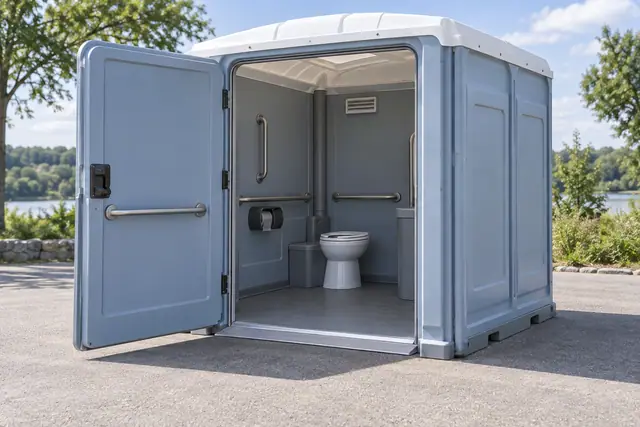
A standard portable toilet and a wider or specifically designated accessible model are not interchangeable descriptions. Ask about the actual offered unit’s entry, doorway, interior manoeuvring space and relevant support features. A photograph or accessibility symbol does not by itself establish that a particular model and installation suit every person.
Then follow the journey to the unit and to handwashing. The approach, standing area and entrance need to remain usable, not just the space inside the cabin. Explain known mobility or assistance requirements in practical terms; avoid assuming the person arranging equipment can select correctly from a label alone.
Avoid a separate facility that creates a separate problem
Imagine an event where most activity is near one entrance but the proposed accessible unit is far away beside a different parking area. The unit could be the requested type while the journey still makes it a poor arrangement for the people attending. Proximity to a delivery gate is not the only consideration.
Compare the practical choices with the property operator and provider. A better permitted position may bring the required function closer to the activity. If that position cannot be supported, a different equipment or access arrangement may need assessment. Do not treat a remote token placement as equivalent simply because the correct cabin was ordered.
Resolve user access and service access together
The proposed area needs suitable support and enough clear space for the actual equipment and its users. At the same time, delivery and maintenance must be able to reach it through an authorised route. A useful guest position cannot depend on an unapproved service vehicle movement, and a convenient vehicle route should not force guests into an unsuitable approach.
Have the responsible parties agree the position and handling arrangements before equipment arrives. Other objects, gates or temporary barriers must not consume the space that makes it work. If a change is necessary, ask for it to be reviewed; moving hired equipment yourself can invalidate the arrangement you were relying on.
Keep the accessible function usable for the entire hire
Include toilet supplies, handwashing supplies and agreed cleaning in the rental discussion. Assign ordinary condition checks and a contact for reporting a blocked route, missing supplies or equipment concerns. Provider waste servicing and any relocation should remain coordinated with the provider, not improvised by guests or volunteers.
Request the actual model or agreed features, the full use period, approved position, support responsibilities, delivery and collection in the quote. Where the event or worksite has specific accessibility requirements, resolve them with the appropriate responsible parties rather than treating an equipment description as a compliance certificate.
Questions before you book
Does a wider cabin prove the site is accessible?
No. The actual model, approach, entrance, surrounding space and washing arrangement all matter. Ask for the complete proposed setup to be considered against the users’ needs.
Should the accessible unit always be beside the delivery gate?
Not automatically. Its position must support the people using the activity while remaining permitted and serviceable. Review those requirements together.
What should I do if the approach becomes blocked?
Notify the named site or event contact and the relevant provider contact. Restore access through an agreed action rather than moving the rented unit or directing users to an unsuitable substitute.