
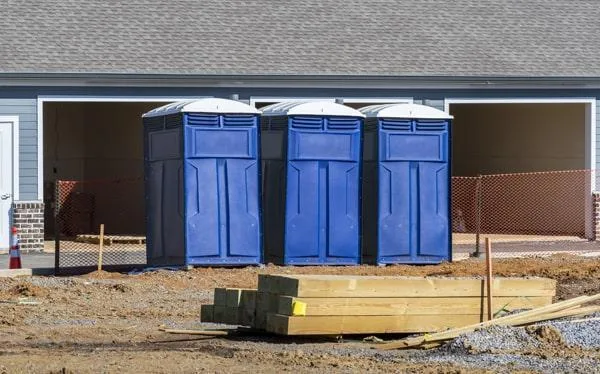
Understand the equipment before dividing the scope
A standard portable toilet provides a private cabin and contained waste storage for temporary use. Washing is a separate function to address: the offered cabin may not include a sink or the supplies needed for handwashing. Identify any accessible requirements and any proposed enhanced features rather than assuming a basic order includes them.
Describe the people who will be working, their occupied hours and the fixed facilities they are actually allowed to use. A bathroom somewhere in the building is not necessarily available to every contractor. Start with that practical picture before asking for a quantity or selecting a package by its name.
A site-wide order and a trade-specific order are different
In one arrangement, the main contractor may order facilities for everyone working within the agreed site operation. In another, a subcontractor may be responsible only for its own people. Neither arrangement should be assumed from the fact that a toilet is already visible on site.
Ask who is entitled to use the existing provision and who has agreed to maintain it. If your crew is included, confirm how its hours and needs enter the shared plan. If it is not included, the separate order should identify its own intended users. Ordering the same equipment twice does not necessarily improve the plan if both orders depend on the same blocked space or leave washing unresolved.
Match the purchasing agreement to the actual site
The buyer and the person controlling the property should identify the permitted equipment area, receiving entrance and servicing access. Include the route workers will use to reach the facilities without crossing an avoidable loading or work conflict. The supplier needs the real access conditions, not only an office address used for billing.
Record which party handles routine checks and agreed consumable replenishment and which services the rental provider supplies. Cleaning and waste servicing, assistance with a damaged unit and changing an equipment position are not interchangeable duties. Give the site supervisor the agreed scope rather than leaving the supervisor to reconstruct it after delivery.
Keep changes in people visible in the quote
A new trade, a second shift or a change in which building bathrooms are available can alter the arrangement. Raise that change with the party responsible for the order and the provider. Do not assume the initial equipment count or cleaning plan automatically covers everyone subsequently added to the job.
Ask the quotation to identify equipment functions and quantities, rental period, delivery and collection, cleaning, supplies and any conditional additional service. Access conditions and continuing usage are meaningful non-numeric cost factors. Keep the accepted service scope alongside the work package so both purchaser and supervisor can check the same understanding.
Questions before you book
Can our subcontractor use the toilets already on the site?
Confirm that with the party responsible for those facilities. Their presence does not establish that your people or hours are included in the agreed provision.
Does a standard unit include handwashing?
Do not assume so. Ask what the actual unit includes and arrange a suitable washing option and supplies where the existing provision does not meet the need.
What should happen when another crew joins?
Tell the responsible order contact and provider about the changed users and hours. Review equipment and care against the new scope rather than silently relying on the first arrangement.